|
Introduction Water contaminated with dyes requires treatment to remove them using various adsorbents or techniques prior to discharge into local drainage systems or natural water bodies. Dyes are employed across numerous industries, including textiles, cosmetics, ink, plastics, paper, food, pharmaceuticals, pulp, leather, printing, paints, and rubber, owing to their high solubility in water and capacity to impart intense color [1-3]. Trypan blue (TB) is a water-soluble azo dye, classified as an anionic acidic dye, with a molar mass of 960.81 g/mol and a chemical formula of (C34H24N6Na4O14S4). It is used in biological staining, vitreoretinal surgery, cell viability assessment, and food coloring processes. However, Trypan Blue (TB) is cytotoxic to cells. Empirical studies have demonstrated that exposure of human retinal pigment epithelial cells (ARPE-19) to TB in vitro induces cellular toxicity and reduced viability, with the severity of these effects contingent on the dye concentration and exposure duration. Furthermore, elevated TB concentrations pose a threat to aquatic organisms and the environment. The discharge of untreated water contaminated with this dye can adversely affect natural water bodies, disrupt aquatic ecosystems, and pose significant risks to human and environmental health [4-6]. The release of untreated water contaminated with this dye can adversely affect natural water resources, disrupt aquatic ecosystems, and pose significant health risks to humans, including toxicity and carcinogenicity. To protect the environment from contamination, it is imperative to eliminate TB discharges from various industries in water sources. The issue of dye pollution in water has led to the development of numerous water treatment methods, including advanced oxidation processes, ion exchange, deep eutectic solvents, coagulation-flocculation, adsorption, electrocoagulation, wet oxidation, sedimentation, arc discharge, membrane bioreactors, phytoremediation, reverse osmosis, sequencing batch reactors, and membrane filtration. Among these, adsorption is recognized as one of the most commonly employed treatment techniques because of its cost-effectiveness, simplicity, high efficiency, and environmental compatibility. Various adsorbents, such as clay, hydrogels, activated carbon, and graphene oxide, have been utilized [7,8]. Hydrogels, also known as superabsorbent polymers, are considered innovative materials due to their versatility and biocompatibility. They consist of three-dimensional cross-linked polymer networks that are water-soluble but swell upon contact with water, enabling them to absorb water and biological fluids without compromising their structural integrity. This absorption capability is attributed to the presence of hydrophilic groups, such as (–OH, – CONH, –CONH2, –COOH, and -SO3H) in the polymer chain [9,10]. These hydrogels can absorb additional biological fluids, and their expanded state allows them to retain substantial amounts of fluid. They have garnered significant attention for their applications in biomedical, environmental, energy, and engineering fields due to their enhanced water absorption and biocompatibility. Despite the development of various types of hydrogels, there remains a need for non-toxic, eco-friendly hydrogels that can be easily prepared with the desired properties [11-13]. Many inorganic clay minerals, such as kaolin, bentonite, and attapulgite, along with natural polymeric materials, including polysaccharides (sodium alginate, starch, cellulose, and chitosan), have been employed to develop eco-friendly organic–inorganic superabsorbent composites to reduce production costs and enhance performance. Sodium alginate (SA), an anionic polysaccharide derived from brown seaweed, has been extensively investigated because of its non-toxic nature, biodegradability, and ability to form gels in the presence of divalent cations such as Ca2+. SA is renowned for its exceptional film-forming and gelation properties, rendering it widely utilized in biomedicine, food packaging, and environmental remediation [14,15]. Acrylic acid (AA), a synthetic monomer bearing a carboxylic acid group, is commonly used in hydrogel production due to its ability to impart significant hydrophilicity to the gel. When copolymerized with natural polymers, such as sodium alginate, it enhances mechanical strength and water-absorption capacity while improving the hydrogel's surface characteristics [16,17]. The resulting hybrid or composite hydrogels integrate the advantages of both natural and synthetic materials, making them popular for applications such as drug delivery, wound dressing, biosensing, agriculture, and wastewater treatment. Recently, SA/AA hydrogels have demonstrated considerable potential as effective adsorbents for removing organic dyes and heavy metals from contaminated water, particularly when modified with nanoparticles or other functional fillers to enhance their adsorption capacity and durability [18]. This study aims to develop and evaluate a SA/AA hydrogel for the efficient adsorption and regeneration-based removal of trypan blue dye from aqueous solutions. The research focuses on the hydrogel's structural properties and its performance across multiple cycles.
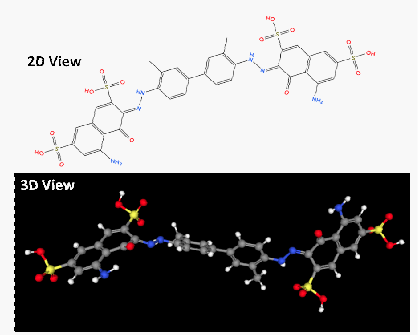
Experimental Part Materials Sodium alginate (SA, purity 99%) was used as the main biopolymer backbone, and acrylic acid (AA, purity 98%) was employed as the grafting monomer. Poly(vinyl alcohol) (PVA, ≥99% purity) was used as a hydrophilic polymer to enhance the mechanical stability of the hydrogel network. Potassium per sulfate (KPS, purity 97%) was used as a free-radical initiator, and N, N′-methylene bisacrylamide (MBA, purity 99%) was used as a cross-linking agent. Trypan Blue (TB) dye was selected as the model anionic dye for the adsorption experiments. Hydrochloric acid (HCl) and sodium hydroxide (NaOH) solutions were used to adjust the pH of the samples. All chemicals were of analytical grade, purchased from Sigma-Aldrich, and used as received without further purification. Deionized water was used in all experiments . Preparation of SA-g-poly(AAC-co-PVA) Hydrogel The hydrogel was synthesized via free-radical polymerization using sodium alginate (SA), acrylic acid (AA), and poly(vinyl alcohol) (PVA) as monomeric components. Initially, a 2 wt% SA solution was prepared by dissolving 0.50 g of sodium alginate in 20 mL of deionized water under magnetic stirring at 60°C until complete homogenization. In parallel, 0.50 g of PVA was dissolved in 30 mL of deionized water at 80°C to obtain a clear polymer solution, which was subsequently cooled to room temperature. The PVA solution was then combined with the SA solution to form a blended biopolymeric matrix. Separately, the monomer mixture was prepared by diluting 10 mL of acrylic acid (AA; 0.14 mol) with 3 mL of deionized water, followed by the addition of potassium persulfate (KPS; 0.05 g, 0.18 mmol) as the radical initiator and N,N′-methylene bisacrylamide (MBA; 0.05 g, 0.32 mmol) as the covalent cross-linker. This mixture was stirred for 30 min to ensure uniformity. The SA/PVA blend was gradually added to the AA/KPS/MBA solution under continuous stirring to ensure complete dispersion of all components. The final precursor mixture was cast into Petri dishes and thermally polymerized at 60°C for 1–2 h, forming a cross-linked three-dimensional hydrogel network. After gelation, the hydrogels were removed, repeatedly washed with deionized water to remove unreacted species, and dried at 50–60°C to constant mass. This preparation method yielded a mechanically stable hydrogel with enhanced structural integrity and high-water absorption capacity, owing to the combined roles of SA, PVA, and the covalently cross-linked AA network. Swelling Ratio Water adsorption studies are critical for evaluating the performance of hydrogel-based adsorbents, as their swelling behavior directly reflects their porosity, hydrophilicity, and accessibility of active sites. These studies quantify the material's ability to uptake and retain water under controlled environmental conditions, such as fixed temperature, humidity, and immersion time. The swelling behavior is commonly expressed as the swelling ratio (SR), which represents the percentage increase in mass of the hydrogel due to water uptake. This parameter provides a reliable measure of the hydrogel’s water-holding capacity and structural flexibility and is calculated using the following equation (1) [19]: where ws is the weight of the swollen hydrogel (g), and Wd is the weight of the dry hydrogel (g). Study Gel Content The gel content (Gc%) of the (SA-g-poly(AAC-co-PVA)) hydrogel was determined to quantify the fraction of the hydrogel network that remains insoluble in water. Initially, the hydrogel samples were dried and weighed, then immersed in distilled water for 24 h at 25°C to extract the soluble components. After extraction, the samples were dried again and reweighed. The gel content (Gc%) was calculated using equation 2: where Md represents the weight of the dried sample after extraction, and Mo corresponds to the initial weight of the dried sample before extraction. Preparation of Trypan Blue Dye Solution Figure 1 shows the chemical structure of Trypan Blue dye is an anionic azo dye with the molecular formula (C34H24N6Na4O14S4) and a molecular weight of 960.81 g.mol-1 illustrates the chemical structure of the TB dye.
A stock solution at 1000 mg L-1 was prepared by dissolving 0.1 g of dye powder in 100 mL of distilled water. The maximum absorption wavelength (λmax) was determined using a UV-Vis spectrophotometer, and the maximum absorbance peak was observed at 588 nm. Adsorption Studies Batch adsorption experiments were performed to evaluate the removal efficiency of Trypan Blue (TB) dye using the synthesized SA-g-poly(AAC-co-PVA) hydrogel. All experiments were conducted in 100 mL of dye solution using a water bath shaker at 120 rpm and 30°C. To investigate the effect of initial dye concentration, solutions at 50-500 mg L-1 were used with a fixed hydrogel dosage of 0.07 g. The effect of adsorbent dosage was studied by varying the hydrogel amount (0.01–0.10 g) in a dye solution with a constant concentration of 200 mg L-1. The influence of solution pH was examined at values of 3, 7, 8, and 10 by adjusting the pH with 0.1 M HCl and 0.1 M NaOH solution. After reaching equilibrium, the residual dye concentration was determined using a UV-Vis spectrophotometer at (λmax) of 588 nm. The equilibrium adsorption capacity (Qe mg.g-1) and removal percentage (R%) were calculated using the following equations (3) and (4): where Qe (mg. g-1) denotes the equilibrium adsorption capacity; C0 and Ce (mg. L-1) represent the initial and equilibrium concentrations of Trypan Blue dye, respectively; V (L) refers to the solution volume of TB dye, and W (g) indicates the mass of the dry hydrogel. Characterization Techniques The surface functional groups of the synthesized SA-g-poly(AAC-co-PVA) hydrogel were identified using Fourier Transform Infrared Spectroscopy (FTIR) in the spectral range of 400–4000 cm-1. The surface morphology and porous structure were examined using Field Emission Scanning Electron microscopy (FESEM). To investigate the internal structure and nanoscale particle-size distribution, Transmission Electron Microscopy (TEM) was used. The crystalline nature of the prepared hydrogel was analyzed by X-ray Diffraction (XRD) using Cu-Kα radiation. Furthermore, the thermal stability and degradation behavior of the hydrogel were evaluated using thermogravimetric analysis (TGA) over a temperature range of 25–600°C under a nitrogen atmosphere. Adsorption Isotherm Models Nonlinear isotherm adsorption models effectively characterize the interaction between the adsorbent and adsorbate. In this study, the Freundlich and Langmuir isotherm models are employed to examine adsorption. The Freundlich isotherm model is calculated using equation 5: The Langmuir isotherm is primarily used to describe the adsorption of dyes from aqueous solutions. The Langmuir isotherm nonlinear model is calculated from equation 6: where Qe: amount adsorbed per unit mass of adsorbent at equilibrium (mg.g-1), (mol.g-1), Ce: equilibrium concentration (mg. L-1), (mol. L-1), and Kf: capacity factor or Freundlich constant empirical (L.mg-1). 1/n: Freundlich exponent, if the (n) value reaches unity, the adsorption is linear; if the n value is above unity, then the adsorption process is physical; if the “n” value is below unity, the adsorption process is chemical. Langmuir constant empirical, which represents maximum adsorption efficiency (mg.g-1), KL: Langmuir constant (L/mg) or the equilibrium constant of the adsorption process [20].
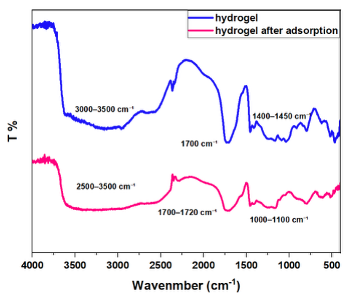
Results and Discussion FTIR analysis before and after adsorption The Fourier transform infrared (FTIR) spectra of the SA-g-poly(AAC-co-PVA) hydrogel before and after Trypan Blue adsorption are illustrated in Figure 2. The spectrum of the pristine hydrogel displays a broad absorption band in the region of 3200–3500 cm-1, which is attributed to the stretching vibrations of hydroxyl (–OH) groups associated with sodium alginate and poly(vinyl alcohol), indicating strong hydrogen bonding interactions within the polymeric network [21].
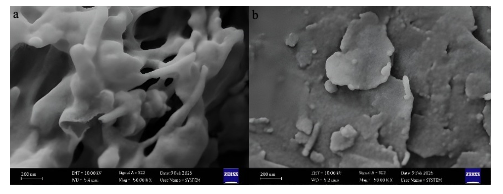
The absorption band observed around 1700–1720 cm-1 corresponds to the carbonyl (C=O) stretching vibration of acrylic-based units, confirming successful grafting and cross-linking of the polymer chains. In addition, the bands located near 1400–1450 cm-1 are assigned to the symmetric stretching vibrations of carboxylate (–COO⁻) groups, while the peaks appearing in the range of 1000–1100 cm-1 are related to C–O and C–O–C stretching vibrations of the polysaccharide backbone [22,23]. After adsorption of Trypan Blue, noticeable changes in the FTIR spectrum were observed, including slight shifts and decreases in the intensity of the –OH and –COO⁻ related bands. These variations indicate the involvement of hydroxyl and carboxyl functional groups in the adsorption process via electrostatic interactions and hydrogen bonding. The preservation of the prominent characteristic absorption bands after adsorption suggests that the hydrogel framework remains structurally stable during dye uptake [24,25]. Surface morphology analysis (FESEM) The surface morphology of the prepared hydrogel before and after Trypan Blue adsorption was examined using field-emission scanning electron microscopy (FESEM), as shown in Figure 3a. The FESEM image of the pristine hydrogel reveals a highly porous, interconnected three-dimensional network with irregular cavities distributed throughout the surface. This porous structure is typical of alginate-based hydrogels prepared via free-radical graft polymerization and provides numerous accessible pathways that facilitate dye diffusion and adsorption processes [26,27].
After adsorption (Figure 3b), the hydrogel surface becomes denser and partially covered by aggregated layers, indicating effective attachment of Trypan Blue molecules to the hydrogel matrix. The observed reduction in visible pore openings indicates that dye molecules occupy both internal pores and active surface sites via a combination of surface interactions and pore-filling mechanisms. Despite these morphological changes, the three-dimensional network framework remains largely preserved, demonstrating sufficient mechanical stability of the hydrogel during adsorption. This structural integrity is a key factor in maintaining regenerative capability and enabling repeated adsorption cycles [28,29]. Internal structure analysis (TEM)
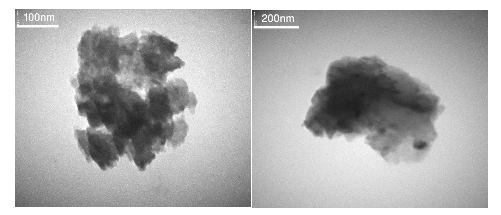
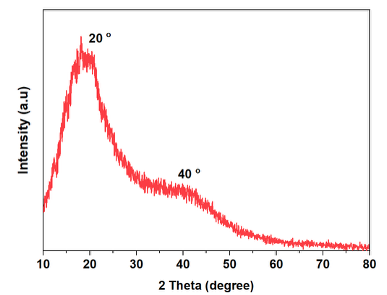
The internal morphology of the prepared hydrogel was investigated using transmission electron microscopy (TEM), as shown in Figure 4. The TEM images reveal irregular agglomerated regions containing nanoscale features dispersed throughout the polymeric matrix. These darker contrast areas correspond to polymer-rich domains formed during grafting and cross-linking and are commonly observed in biopolymer-based superabsorbent hydrogels [30]. At higher magnification, the hydrogel displays clustered internal domains with nonuniform boundaries and a relatively compact network. This structural appearance suggests that acrylic-based grafting onto the alginate backbone leads to the formation of dense nanoscale regions embedded within the swollen hydrogel network. Such features are beneficial for adsorption, as they facilitate dye diffusion and increase the number of accessible interaction sites. In addition, the absence of distinct crystalline lattice fringes confirms the predominantly amorphous nature of the hydrogel, which is advantageous for adsorption applications and is consistent with the XRD observations [31]. X-ray Diffraction (XRD) analysis The X-ray Diffraction (XRD) pattern of the prepared SA-g-poly (AAC-co-PVA) hydrogel is presented in Figure 5. The dif- fractogram is characterized by a broad amorphous halo extending over the 2θ range of approximately 15–25°, while distinct crystalline peaks are absent.
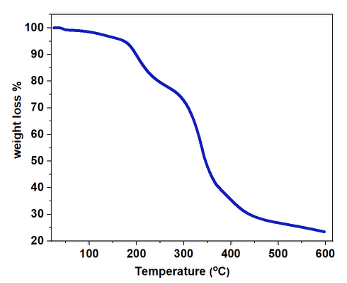
This feature indicates that the synthesized hydrogel predominantly possesses an amorphous structure. Such diffraction characteristics are frequently reported for polysaccharide-based hydrogels obtained via graft polymerization and cross-linking processes, in which the introduction of synthetic polymer chains interferes with the regular packing of the biopolymer backbone [32,33]. The suppression of crystalline features can be attributed to the grafting of acrylic segments onto alginate chains and to the physical entanglement of PVA within the three-dimensional cross-linked network. Such structural rearrangements hinder long-range crystalline order and result in a homogeneous amorphous matrix, as reported for alginate- and acrylic-based hydrogel nanocomposites. The predominance of the amorphous structure is favorable for adsorption processes because it provides greater flexibility of the polymer chains and improves the exposure of functional groups, including hydroxyl (–OH) and carboxyl (–COO⁻) moieties. Such structural characteristics facilitate more effective interactions between Trypan Blue molecules and the available active sites within the hydrogel network, thereby enhancing adsorption performance [34]. Thermal stability analysis (TGA) The thermal stability of the prepared alginate–acrylic–PVA hydrogel was evaluated using thermogravimetric analysis (TGA), as illustrated in Figure 6. The resulting TGA profile shows a stepwise weight-loss pattern, which is commonly observed for cross-linked polysaccharide-based grafted hydrogels.
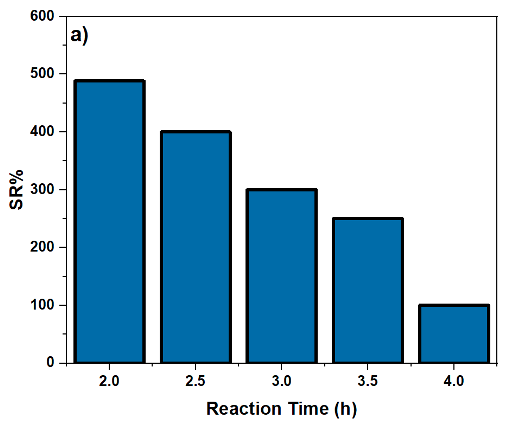
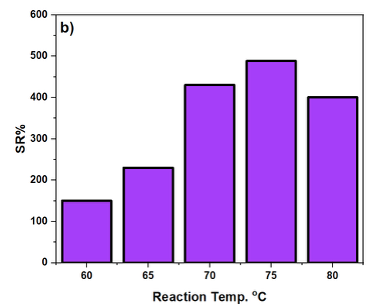
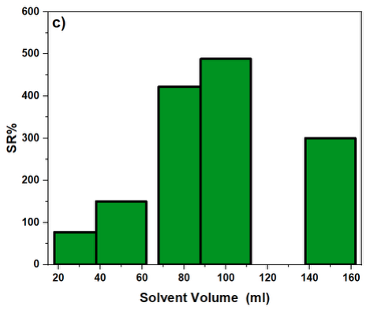
An initial minor mass loss occurs below approximately 120°C and is mainly related to the release of physically adsorbed and weakly bound water molecules within the hydrogel structure. A second degradation stage is evident in the temperature range of 200–300°C and is attributed primarily to the thermal decomposition of grafted acrylic components, as well as to the breakdown of pendant functional groups formed during grafting process [35,36]. At temperatures exceeding 300°C, a more substantial weight loss is observed, corresponding to the degradation of the alginate and PVA backbone chains and the progressive collapse of the three-dimensional cross-linked network. The overall degradation behavior, together with the presence of a measurable residual mass at higher temperatures, suggests that the incorporation of acrylic units and PVA chains contributes to improving the thermal stability of native alginate. This observation confirms the formation of a structurally stable, cross-linked hydrogel suitable for adsorption under a range of thermal conditions [37]. Optimization of Reaction Parameters The synthesis conditions of the SA-g-poly(AAC-co-PVA) hydrogel were systematically optimized to maximize its swelling performance. The effects of reaction time and temperature were evaluated while keeping the concentrations of KPS (0.05 g), MBA (0.05 g), and acrylic acid (0.14 mol L-1) constant. Effect of reaction time Effect of reaction temperature The reaction temperature was varied from 55 to 75°C in 5°C increments (Figure 7b). Swelling increased with temperature, reaching a maximum of 530% at 75°C. The initial increase is attributed to enhanced thermal decomposition of the initiator (KPS), which generates more free radicals and promotes efficient grafting and network formation. This results in a more open and porous hydrogel structure that favors water uptake. However, at temperatures above the optimum, excessive radical activity increases crosslink density and can lead to chain termination, resulting in a more compact network and reduced swelling [41,42]. Effect of solvent volume As shown in Figure 7c, the swelling percentage initially increases with increasing solvent volume, reaches a maximum at 100 mL, and then declines.
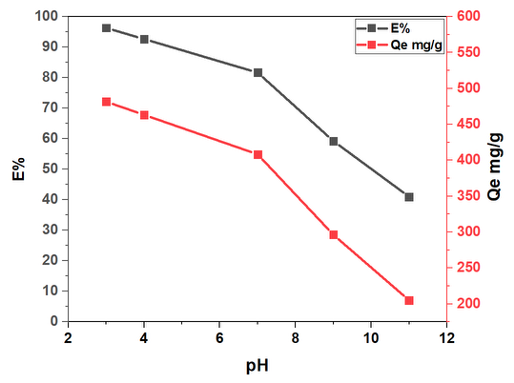
The initial enhancement in swelling is attributed to improved dispersion of monomers and initiator in a larger solvent volume, which facilitates efficient free-radical generation and promotes uniform polymerization and network formation. This results in a more open and porous hydrogel structure that favors water uptake. However, beyond the optimal solvent volume, excessive dilution reduces the frequency of effective radical–monomer collisions, thereby lowering crosslinking efficiency and weakening network formation, thereby decreasing swelling capacity [43,44]. Overall, both reaction time and temperature strongly influence the balance between network formation and crosslinking density. Optimal swelling is achieved when the hydrogel network is sufficiently crosslinked to maintain structural integrity while remaining sufficiently flexible and porous to maximize water absorption [45,46]. Effect of Operational Parameters on Trypan Blue Adsorption Effect of solution pHThe role of solution pH in controlling Trypan Blue adsorption onto the alginate–acrylic–PVA hydrogel was examined across a pH range of 3–11, as presented in Figure 8. A clear decrease in both removal efficiency (E%) and adsorption capacity (Qe) was observed with increasing pH, At pH 3, the hydrogel showed high adsorption performance, with E = 96% and Qe = 480 mg g-1 [47,48]. In contrast, at pH 11, both values decreased markedly to E = 41% and Qe = 210 mg g-1, demonstrating the pronounced decline in adsorption with increasing pH. indicating that acidic conditions favor dye uptake.
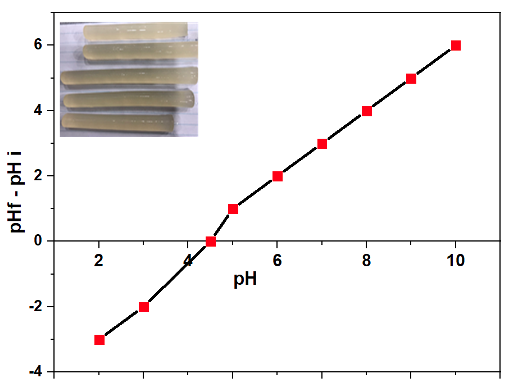
This behavior is associated with changes in the surface charge of the hydrogel arising from the ionization state of functional groups within the alginate/PVA network, particularly carboxylic (–COOH/–COO-) and hydroxyl (–OH) moieties. Under acidic conditions, protonation converts –COO- groups into their neutral –COOH form, which lowers electrostatic repulsion between the hydrogel surface and the anionic sulfonate groups (–SO3-) of the dye. As a result, adsorption is enhanced through a combination of electrostatic attraction and hydrogen-bonding interactions. Similar pH-controlled adsorption behavior has been reported for polysaccharide- and acrylic-based hydrogel adsorbents. In contrast, under alkaline conditions, deprotonation increases the density of –COO- sites, thereby strengthening electrostatic repulsion against anionic dye species and weakening adsorption, consistent with charge-governed adsorption observed for related hydrogel systems [49,50]. Point of zero charge (PZC) Because the adsorption behavior of materials is strongly governed by their surface characteristics, determining the point of zero charge (PZC) provides essential insight into surface charge properties. In this study, the PZC of the (SA-g-poly(AAC-co-PVA)) hydrogel was determined using the pH drift method, a reliable technique for surface characterization. The PZC is the pH at which the net surface charge, including both internal and external sites, is zero. Below pHpzc, the hydrogel surface acquires a positive charge, whereas above pHpzc it becomes negatively charged.
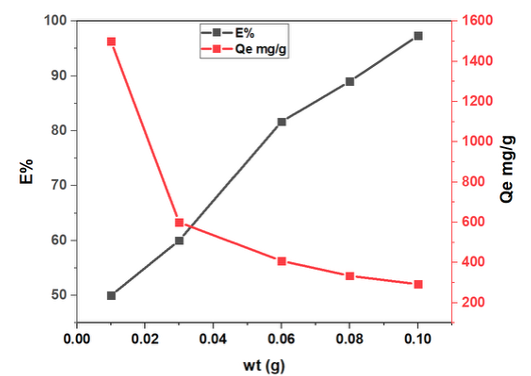
As illustrated in Figure 9, the initial pH (pHi) was plotted against the difference between the initial and final pH (ΔpH) after introducing a fixed amount of hydrogel into a 0.1 N NaCl solution. The pHpzc value was determined to be 4.5, indicating that under typical experimental conditions, the hydrogel surface predominantly carries a negative charge. This behavior suggests that the functional groups along the polymer chains play a key role in governing the surface charge and, consequently, the adsorption performance of the hydrogel [51,52]. Effect of adsorbent dosage The effect of adsorbent dosage on Trypan Blue adsorption was examined by increasing the hydrogel mass from 0.01 to 0.10 g (Figure 10). As the dosage increased, the removal efficiency (E%) rose markedly, which is mainly attributed to the higher availability of adsorption sites and the larger effective surface area provided by increasing amounts of hydrogel in the solution. For example, increasing the hydrogel mass from 0.01 g to 0.10 g increased E% from ~50% to ~97% (Figure 10).
In contrast, the adsorption capacity per unit mass (Qe, mg g-1) decreased with increasing dosage. This behavior is commonly observed for hydrogel-based adsorbents when a fixed initial dye concentration is used, where many adsorption sites remain unsaturated at higher adsorbent dosages. Additionally, increasing hydrogel mass may lead to partial aggregation of swollen polymer domains, thereby reducing the accessibility of internal adsorption sites and decreasing Qe despite improved overall dye removal. Consistent with this, Qe decreased from ~1500 mg g-1 at 0.01 g to ~300 mg g-1 at 0.10 g, confirming the opposite trends of E% and Qe with increasing hydrogel dosage [53,54]. Effect of initial Trypan Blue concentration
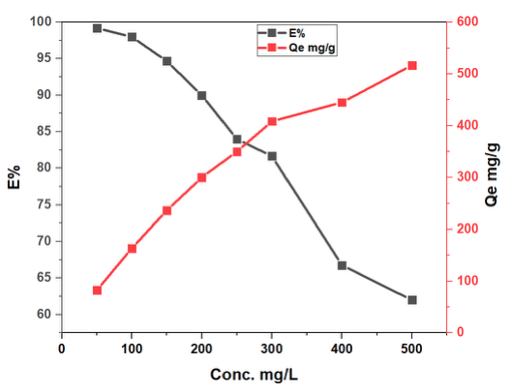
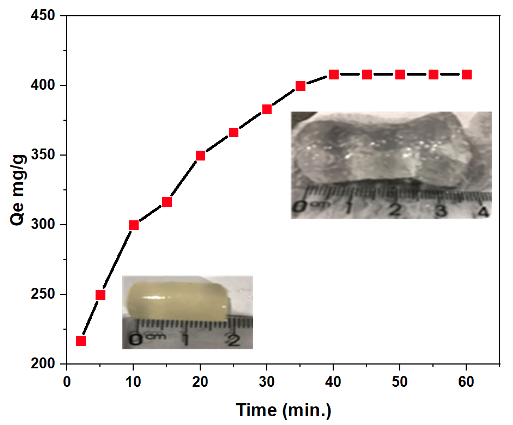
The effect of the initial Trypan Blue concentration on the adsorption performance of the SA-g-poly(AAC-co-PVA) hydrogel was examined over a concentration range of 50–500 mg L⁻¹, as illustrated in Figure 11. An increase in dye concentration was accompanied by a gradual reduction in removal efficiency (E%), whereas the adsorption capacity (Qe) showed a continuous increase. As shown in Figure 11, increasing the initial Trypan Blue concentration from 50 mg L-1 to 500 mg L-1 resulted in a noticeable decrease in E, from about 98% at 50 mg L-1 to nearly 62% at 500 mg L-1, while Qe increased significantly from approximately 90 mg g-1 to around 520 mg g-1 over the same concentration range. At lower concentrations, the abundance of available adsorption sites relative to the number of dye molecules promotes more efficient uptake, thereby increasing removal efficiency. With further increases in the initial concentration, these sites become progressively saturated, intensifying competition among dye molecules and resulting in a noticeable decline in E% [55]. In contrast, the continuous increase in Qe at higher initial concentrations is attributed to the steeper concentration gradient between the bulk solution and the hydrogel surface, which enhances the mass-transfer driving force and allows greater dye accumulation per unit mass of adsorbent. The opposite trend between E% and Qe with increasing initial dye concentration is characteristic of hydrogel-based adsorbents and has been reported for polysaccharide–acrylic hydrogel systems used in dye adsorption studies [56,57]. Effect of contact time The effect of contact time on Trypan Blue uptake by the SA-g-poly (AAC-co-PVA) hydrogel is presented in Figure 12. The adsorption capacity (Qe) increases rapidly during the initial stage, reaching approximately 350 mg/g after about 25 min, which is attributed to the abundance of available active sites and the high concentration gradient between the solution and the hydrogel surface.
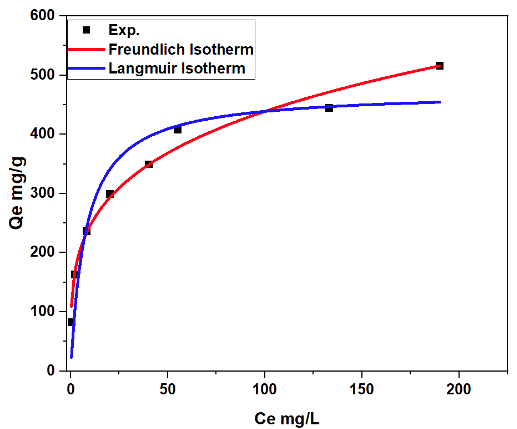
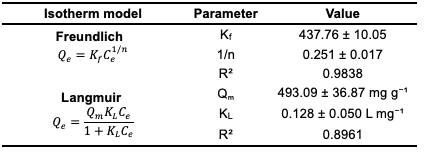
Beyond this period, the adsorption rate gradually decreases, and equilibrium is attained after approximately 40 min, with a maximum Qe of approximately 410 mg/g. This behavior is related to the progressive occupation of adsorption sites and the development of diffusion resistance within the cross-linked hydrogel network. Similar time-dependent adsorption profiles have been widely reported for polysaccharide-based hydrogels and bio-adsorbents used for dye removal [58]. Adsorption Isotherm The equilibrium adsorption data of Trypan Blue onto the prepared hydrogel was evaluated using the Langmuir (monolayer) and Freundlich (multilayer) isotherm models, as shown in Figure 13.
At the same time, the corresponding fitting parameters are summarized in Table 1.
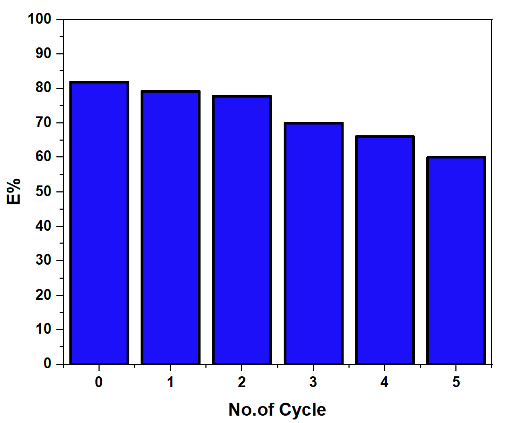
The fitting results indicated that the Freundlich model provides a superior description of the experimental data, as evidenced by its higher correlation coefficient (R² = 0.983) than the Langmuir model (R² = 0.896). This indicates that the adsorption process predominantly follows a multilayer mechanism on a heterogeneous hydrogel surface rather than uniform monolayer coverage [59]. The predominance of the Freundlich model suggests that Trypan Blue molecules interact with adsorption sites of different energies distributed within the grafted polymeric network of the hydrogel. Such adsorption behavior is commonly reported for alginate- and polysaccharide-based hydrogels and reflects the structural complexity and nonuniform surface characteristics inherent to these materials [60,61]. Regeneration Efficiency The regeneration and reusability performance of the prepared hydrogels was evaluated over five consecutive adsorption–desorption cycles, as illustrated in Figure 14. The hydrogel exhibited an initial removal efficiency of approximately 82%, which gradually decreased with increasing regeneration cycles.
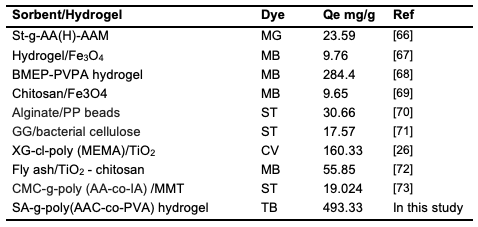
After the second cycle, the removal efficiency changed little, remaining around 78%, indicating acceptable preservation of the hydrogel framework and accessibility of a considerable fraction of adsorption sites [62,63]. From the third cycle onward, a more pronounced decrease became evident, and the efficiency dropped to approximately 60% by the fifth cycle. This decline is likely attributable to cumulative effects arising from repeated use, including partial obstruction of active sites, incomplete release of adsorbed dye molecules during desorption, and minor structural fatigue within the crosslinked polymer network. Comparable regeneration trends have been reported for polysaccharide-based and grafted hydrogel systems, supporting the feasibility of employing such materials for multiple adsorption–desorption cycles [64,65]. Comparative Analysis with Existing Adsorbents To evaluate the adsorption efficiency of the synthesized (SA-g-poly(AAC-co-PVA)) hydrogel for the removal of the anionic Trypan Blue (TB) dye from aqueous solutions, a comparative analysis was performed against previously reported adsorbents. Although direct comparisons are constrained by differences in experimental parameters, including operating conditions and adsorption environments, the results summarized in Table 2 indicate that the prepared hydrogel exhibits a notably high maximum adsorption capacity. These findings highlight the competitive performance and potential applicability of the synthesized hydrogel as an effective adsorbent for removing anionic and cationic dyes.
Conclusion The present study demonstrates that a cross-linked SA-g-poly(AAC-co-PVA) hydrogel can effectively remove Trypan Blue (TB) from aqueous solutions. Spectroscopic and microscopic characterizations (FTIR, FESEM, TEM, and XRD) verified the successful formation of a porous and mainly amorphous hydrogel structure, which is advantageous for adsorption processes. The adsorption behavior was found to be highly dependent on the experimental conditions. Acidic media promoted dye uptake, and the highest performance was observed at pH 3, where the removal efficiency exceeded 93%, owing to protonation of surface functional groups and reduced electrostatic repulsion with anionic dye species. The adsorption process proceeded rapidly, reaching equilibrium after approximately 40 min, at which point a high Qe of 410mg/g was achieved, reflecting the fast occupation of readily accessible adsorption sites. Initial dye concentration also played a key role in controlling adsorption performance. The highest removal efficiency was observed at an initial concentration of 50 mg L-1 (E% ≈ 98%), whereas increasing the concentration resulted in a gradual decrease in efficiency due to saturation of active sites. Regarding adsorbent dosage, increasing the hydrogel mass improved dye removal, and an optimal dosage of 0.10 g was identified, corresponding to ~95% removal efficiency. Beyond this dosage, the improvement in efficiency became less pronounced due to partial site underutilization. Isotherm analysis revealed that the adsorption data were better described by the Freundlich model (R² = 0.983), indicating a heterogeneous adsorption surface. Furthermore, the hydrogel retained nearly 60% of its initial removal efficiency after multiple regeneration cycles, confirming its reasonable stability and potential for repeated use.
References
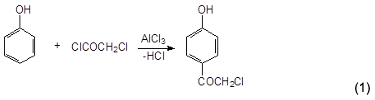
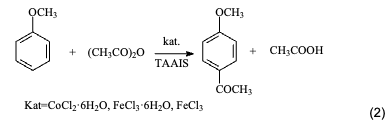
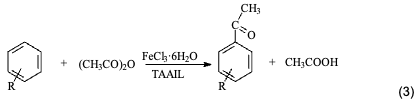
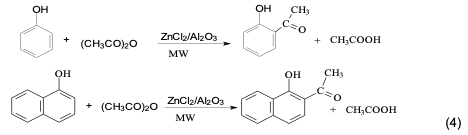
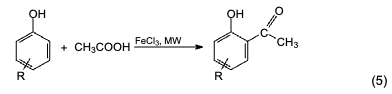
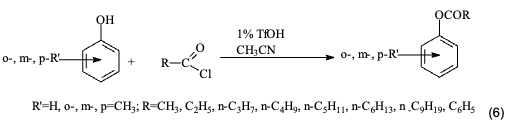
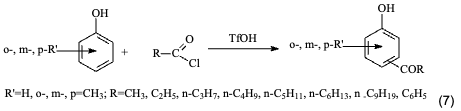
At present, the preparation of derivatives of 2-chloropropionyl chloride is one of the new important directions in organic chemistry. 2-Chloropropionyl chloride is an acylating agent, and the compounds it forms with phenol open the way for the synthesis of highly active organic compounds. It is known that in Friedel–Crafts acylation reactions of aromatic hydrocarbons using chloroacetyl chloride as the acylating agent, solvents such as carbon disulfide, nitromethane, and others are usually employed in the presence of aluminum chloride as a catalyst. Under these reaction conditions, benzene, toluene, naphthalene, c-hydrindacene, fluorene, and fluorenones readily undergo condensation reactions with chloroacetyl chloride [1]. The acylation reaction of anisole with acetic anhydride has been carried out in the presence of CoCl₂·6H₂O, FeCl₃·6H₂O, and FeCl₃ catalysts. In the reaction, 1 mol of anisole was reacted with 1.3 mol of acetic anhydride, and 10% catalyst relative to the reagents was used. In addition, 0.5 g of a catalyst prepared from arylalkyl ionic liquids containing various palladate counterions and iron(III) chloride hexahydrate (TAAIL) was employed. The reaction was conducted at 60°C for 24 hours (equation 2) [5]. Previously, when anhydrous Lewis acids were used in this reaction, the yield was low. When aqueous catalysts such as CoCl₂·6H₂O, FeCl₃·6H₂O, and FeCl₃ were used as catalysts, the acylation reaction showed regioselective influence, yielding predominantly the para-isomer. In particular, compared to FeCl₃, the use of FeCl₃·6H₂O resulted in a higher proportion of the para-isomer. In the Friedel–Crafts acylation reaction carried out with 1 mmol of benzene derivatives, 2 equivalents of acetic anhydride, 0.5 g of TAAIL, and 10 mol% FeCl₃·6H₂O catalyst at 60°C, 5% of the ortho-isomer was obtained (equation 3). where R = H, 4 hours, 65%; R = 4-Me, 4 hours, 72%; R = 2,4,6-Me, 4 hours, 83%; R = 2,4,6-OMe, 4 hours, 84%; R = 2,3,5,6-Me, 72 hours, 94%; R = 2,3,5,6-Me, 4 hours, 85% yields were obtained. When compounds containing various substituents on the phenolic ring were subjected to reaction with acetic acid under similar conditions, it was also established that the ortho-isomer relative to the hydroxyl group was formed (equation 5). where R = 2,3-benzo; 3,4-benzo; m-CH₃, p-CH₃, m-OH, p-OH, m-NO₂, o,p-(CH₃)₂. All reactions were conducted under solvent-free conditions. The authors conducted the reaction of phenol and o-, m-, and p-cresols with 1% TfOH–CH₃CN at room temperature for one hour, successfully obtaining O-acylated products. The researchers also carried out reactions of phenol, o-cresol, m-cresol, and p-cresol in the presence of concentrated TfOH catalyst, with equimolar amounts of reagents at room temperature, achieving the formation of C-acylated products. The reaction proceeded as follows (equation 7): In this reaction, the acyl group in phenol and o-cresol predominantly attached at the para-position relative to the hydroxyl group, in p-cresol at the ortho-position, and in m-cresol both ortho and para to the hydroxyl group. The relative reactivity of phenol and cresols in the C-acylation reaction was found to be as follows:
The chloracetylation reactions of the monomethyl ether of hydroquinone with Lewis acids were found to produce both O- and C-chloracetylated products (equation 8). Favorable reaction conditions were determined.
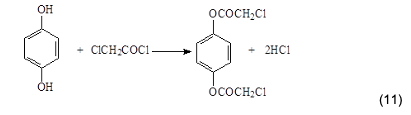
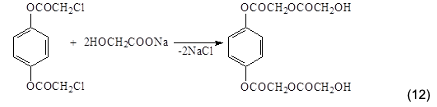
Experiments showed that when these reactions were conducted without catalysts, but in the presence of solvents, the O-chloracetylated products were obtained in high yields. From the experiments, it was established that these reactions proceed very slowly, over periods of up to 24 hours [8-9]. When thymol was chloracetylated in an organic solvent medium without a catalyst, the reaction proceeded regioselectively to form the corresponding esters (equation 9). In particular, when the chloracetylation of thymol was carried out in chloroform, only O-chloracetylation occurred, yielding chloracetylthymol in 95% yield [10]. During the reaction of thymol with chloroacetyl chloride, the electron density in the chloroacetyl chloride molecule shifts toward the electronegative oxygen atom, resulting in the oxygen acquiring a partial negative charge. Due to the influence of the electronegative chlorine and oxygen atoms, the carbon atom acquires a partial positive charge, which interacts with the lone electron pairs of the hydroxyl group in the thymol molecule, allowing the process to proceed further. One of the most important and widespread types of reactions in organic chemistry is nucleophilic substitution reactions occurring at a saturated carbon atom. It should be noted that the nucleophilic substitution reaction is frequently used in the synthesis of substances. In the science of organic chemistry, nucleophilic substitution reactions at saturated carbon atoms have played a crucial role in the emergence and development of fundamental concepts regarding reaction mechanisms. It is well known that dipolar aprotic solvents (such as DMSO, DMF, TGF, acetone, dioxane) facilitate bimolecular nucleophilic substitution reactions of alkyl halides by solvating the cation in the salt of the carboxylic acid. The reaction of O-chloroacetyl thymol with the disodium salt of oxalic acid in dimethylformamide was proposed to proceed according to the following scheme (equation 10): In order to study the acylation reactions of phenols and their derivatives in greater depth, chloracetylation reactions of dihydric phenols were performed. Since the isomers of dihydroxybenzene possess multiple reactive centers, the reactions were carried out under various conditions [11-12]. When chloroform was used as the solvent, it was established that only the O-chloracetylation product was formed. When hydroquinone was heated with chloroacetyl chloride in chloroform for 16 hours, bis-1,4-O-chlora-cetylhydroquinone was obtained. The reaction proceeds according to the following equation (11) [13]: When the reaction of sodium glycolate with bis-1,4-O-chloracetylhydroquinone was con-ducted in DMF under 1:1:3 molar ratios, the process lasted 5 hours and yielded the product in 76% yield. It was found that further prolongation of the reaction time and variation in the molar ratio of the reagents did not affect the yield of the product. Therefore, these reaction conditions can be considered optimal. The reaction equation (12) is as follows: In this context, the reaction equation and mechanism of para-methoxyphenyl chloro-acetate with sodium glycolate in dimethyl-formamide were also studied. The solvation of sodium cations in DMF facilitates the entry of the НОСН₂СОО- ion into the organic phase and promotes the reaction. The researchers developed a mechanism for the formation of the products of these reactions. From this mechanism, it was determined that dimethylformamide solvates the sodium cation of glycolate, thereby enhancing the reactivity of the glycolate anion [12]. Hydroquinone possesses properties that regulate plant growth. When the chlorine atom attached to the carbon atom adjacent to the ketone group is substituted by another nucleophilic group, its negative effect on plant organisms may be reduced. For this purpose, reactions of dichloroacetyl-hydroquinone with the sodium salts of phenol, p-methoxyphenol, p-chlorophenol, and β-naphthol were carried out. Based on these studies, the following reactivity series of the nucleophilic reagents was established [14]: p-methoxyphenol < phenol < β-naphthol < p-chlorophenol. Literature sources have studied the reactions of phenols and isomeric cresols with chloroacetyl chloride [15-16]. However, the chloracetylation reaction of phenol with 2-chloropropionyl chloride has not been in-vestigated. The novelty of this study lies in conducting the chloracetylation reaction of phenol with 2-chloropropionyl chloride to synthesize phenyl-2-chloropropionate. This study aims to synthesize phenyl-2-chloro-propionate through the reaction of phenol with 2-chloropropionyl chloride, and to utilize it as a basis for obtaining novel organic compounds.
Methods and Materials All chemicals and reagents used in this study were of analytical grade purity. Phenol (94.11 g/mol, 99.1%), 2-chloropropionyl chloride (126.97 g/mol, 97%), absolute benzene (78.11 g/mol, 99%), sodium (22.98 g/mol, 97%), calcium chloride (319.85 g/mol, 95%), acetone (58.079 g/mol, 98%), and deionized water (DW) were used for so-lution preparation and washing procedures.
Synthesis of Phenyl-2-chloropropionate in Benzene Solution In all experiments, equimolar quantities of reagents were used. The reaction time was determined by the cessation of hydrogen chloride evolution. Experiment No. 1. Into a round-bottom flask equipped with a reflux condenser, 4.7 g (0.05 mol) of phenol, 6.35 g (0.05 mol) of 2-chloropropionyl chloride, and 30 mL of absolute benzene were added and heated for 10 hours. A hydrogen chloride outlet tube was attached to the upper part of the reaction flask, and the evolved HCl gas was absorbed in water to form hydrochloric acid. The evolution of hydrogen chloride was periodically monitored using litmus paper. To separate unreacted phenol, the reaction product was washed with 10% aqueous alkali and extracted into the benzene layer. The organic layer was then dried over CaCl₂. Benzene was removed from the reaction mixture under ambient conditions, and the remaining product was distilled under reduced pressure using a simple distillation apparatus (110–112°C / 10 mm Hg). The yield of phenyl-2-chloropropionate was 3.8 g (42%). Experiment No. 2. The reaction of 4.7 g (0.05 mol) of phenol with 6.35 g (0.05 mol) of 2-chloropropionyl chloride in 30 ml of absolute benzene was carried out over 12 hours. The yield of phenyl-2-chloropropionate was 5 g (54%). Experiment No. 3. The reaction of 4.7 g (0.05 mol) of phenol with 6.35 g (0.05 mol) of 2-chloropropionyl chloride in 30 ml of absolute benzene was carried out over 15 hours. The yield of phenyl-2-chloropropionate was 5.9 g (64%).
Preparation of Phenyl-2-chloropropionatefrom Sodium Phenolate and 2-Chloropropionyl Chloride in Benzene Solution Experiment No. 1. In a round-bottom flask equipped with a reflux condenser, 4.7 g (0.05 mol) of phenol was placed and dissolved in absolute benzene. Cleaned sodium metal (free from oxide film) was gradually added to the solution. To form sodium phenolate, the reaction mixture was further heated for 2 hours. Next, 6.35 g (0.05 mol) of 2-chloropropionyl chloride was added, and the mixture was heated for 4 hours. As a result of the reaction, a white precipitate of sodium chloride formed, and its quantity began to increase. The reaction product was washed with 10% aqueous alkali and extracted into benzene solution. It was then dried over CaCl₂. Benzene was removed from the reaction mixture under ambient conditions, and the remaining product was distilled under vacuum (110–112°C / 10 mm Hg) using a simple distil-lation apparatus. The yield of phenyl-2-chloropropionate was 4.7 g (51%). Experiment No. 2. In absolute benzene solution, 4.7 g (0.05 mol) of phenol was reacted with 1.15 g (0.05 mol) of sodium to synthesize sodium phenolate. To this, 6.35 g (0.05 mol) of 2-chloropropionyl chloride was added, and the reaction was conducted over 5 hours. The yield of phenyl-2-chloropropionate was 5.3 g (58%). Experiment No. 3. In absolute benzene solution, 4.7 g (0.05 mol) of phenol was reacted with 1.15 g (0.05 mol) of sodium to synthesize sodium phenolate. To this, 6.35 g (0.05 mol) of 2-chloropropionyl chloride was added, and the reaction was conducted over 6 hours. The yield of phenyl-2-chloropropionate was 6.6 g (72%).
Synthesis of Phenyl-2-chloropropionate in Acetone Solution Experiment No. 1. In a round-bottom flask fitted with a reflux condenser, 4.7 g (0.05 mol) of phenol, 6.35 g (0.05 mol) of 2-chloropropionyl chloride, and 25 ml of acetone were added and heated for 7 hours. A hydrogen chloride outlet tube was attached to the upper part of the reaction flask. The evolution of hydrogen chloride was periodically monitored using litmus paper. After the reaction, acetone was first removed under ambient conditions. The reaction product was then washed with 10% aqueous alkali, extracted into benzene, and dried over CaCl₂. Benzene was removed under ambient conditions, and the remaining product was distilled under vacuum (110–112°C / 10 mm Hg) using a simple distillation apparatus. The yield of phenyl-2-chloropropionate was 4.1 g (45%). Experiment No. 2. In an appropriately equipped reaction apparatus, 4.7 g (0.05 mol) of phenol, 6.35 g (0.05 mol) of 2-chloropropionyl chloride, and 25 ml of acetone were added and heated for 9 hours. When the evolution of hydrogen chloride ceased, the process was stopped. After the acetone was removed, the reaction product was washed with water and extracted into benzene. The yield of phenyl-2-chloropro-pionate was 4.8 g (53%). Experiment No. 3. In an appropriately equipped reaction apparatus, 4.7 g (0.05 mol) of phenol, 6.35 g (0.05 mol) of 2-chloropropionyl chloride, and 25 ml of acetone were added and heated for 12 hours. When the evolution of hydrogen chloride ceased, the process was stopped. After the acetone was removed, the reaction product was washed with water and extracted into benzene. The yield of phenyl-2-chloro-propionate was 5.7 g (62%). Since this study was specifically focused on the synthesis of phenyl-2-chloropropionate, the reactions were not carried out at a single fixed temperature and time. Instead, the processes were conducted at the boiling temperatures of the respective solvents. The reaction time was determined and monitored using the Beilstein test. For this reason, the influence of variations in these parameters on product yield was not discussed in the manuscript. To separate the main product, phenyl-2-chloropropionate, from possible impurities, washing with alkaline water followed by vacuum distillation was applied.
Characterization of Phenyl-2-chloropropionate Obtained Under Various Conditions by IR, ¹H NMR, and ¹³C NMR Spectroscopy IR spectra were recorded on a Bruker INVENIO X spectrometer in accordance with ASTM E573. ¹H NMR spectra were recorded in CDCl₃ on a Unity+400 (Varian) instrument operating at 400 MHz. HMDS was used as an internal standard in the ¹H NMR spectra. In the ¹³C NMR spectra, the chemical shift of the solvent was used as the internal standard. Gas chromatography–mass spectrometry (GC-MS) was carried out using a GC 8890 GC module coupled with a 5977 MSD detector (Agilent, USA). A 5HP-MS capillary column with polar stationary phase (30 m × 0.25 mm × 0.3 µm) was used under the following conditions: Injector temper-ature: 280°C, Carrier gas: H₂, 1 ml/min, Thermostat program: Initial 60°C (hold 1 min), ramp 10°C/min to 180°C, then 6°C/min to 230°C (hold 5 min), Detector temperature: 250°C, Ionization by electron impact at 70 eV; MS recording started after 4 minutes (time corresponding to the solvent peak), m/z range: 10–500. To identify the composition of the product formed by the reaction of phenol with 2-chloropropionyl chloride, thin-layer chromatography (TLC) was performed. In a hexane–ethyl acetate system at a 6:2 volume ratio on Silufol UV-254 plates, a single spot with Rf = 0.42 was observed. This compound was identified as phenyl-2-chloro-propionate.
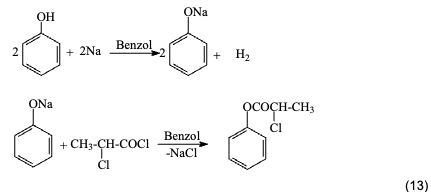
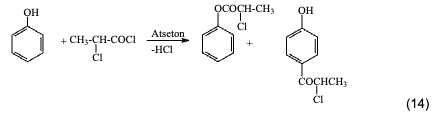
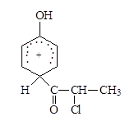
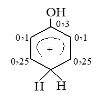
Results and Discussion The synthesized phenyl-2-chloropropionate is a colorless liquid with a pleasant odor. Its boiling point is 110–112°C at 10 mm Hg. In a hexane–ethyl acetate system at a 6:2 volume ratio on Silifol UV-254, it shows an Rf value of 0.42. The refractive index nD20 was determined to be 1.5012. The electrical conductivity was measured at 1.383 (unit). The reaction of phenol with 2-chloro-propionyl chloride was conducted under various conditions. Initially, sodium metal was gradually added to phenol dissolved in absolute benzene. After sodium phenolate had formed, 2-chloropropionyl chloride was added gradually. During the reaction, the sodium phenolate salt dissolved, and the reaction was completed. The reaction scheme (equation 13) can be depicted as follows: To investigate how the reaction between phenol and 2-chloropropionyl chloride proceeds in aprotic solvents and what products are formed, reactions were carried out in acetone solution. The product obtained from the reaction was analyzed. When an aqueous solution of FeCl₃ was added to the product, a violet coloration characteristic of the hydroxyl group was observed. Analysis of the product by thin-layer chromatography (TLC) revealed the presence of two spots. The reaction thus proceeds via O-acylation to form phenyl-2-chloropropionate, and theoretically via C-acylation to form 4-hydroxyphenyl-2-chloropropionate (equation 14). When acetone was used as the solvent, the C-acylated compound 4-hydroxyphenyl-2-chloropropionate was formed, and the reaction product yield was also higher. This can be explained by the formation of a relatively bulky and stable (I) complex under the reaction conditions, which promotes the formation of 4-hydroxyphenyl-2-chloro-propionate (Figure 1):
The absence of acyl group substitution at the ortho position in the phenol chloracetylation reaction can be explained as follows: 1) Because 2-chloropropionyl chloride is bulky, steric hindrance prevents the reaction at the ortho position. 2) The chloropropionyl cation (electrophile) formed in the complex with 2-chloro-propionyl chloride is unstable due to mesomeric effects, resulting in high selectivity (equation 15): Therefore, the most favorable and stable para-isomer is formed in the reaction.
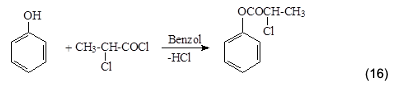
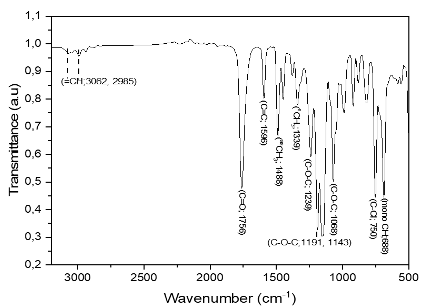
The selectivity of the acyl group and the directing influence of I-type substituents in the aromatic ring toward the para position are known from the literature [18-19]. The reaction of phenol with 2-chloro-pro-pionyl chloride was carried out under various conditions in benzene and acetone solutions. When phenol was reacted with 2-chloropropionyl chloride in benzene solution, the reaction proceeded as follows (equation 16): To determine the composition of the chloropropionylation product of phenol with 2-chloropropionyl chloride, thin-layer chromatography (TLC) was conducted. In a hexane–ethyl acetate system (6:2 by vol-ume) on Silifol UV-254, the product displayed a single spot with an Rf value of 0.42. The reaction product was subjected to physicochemical analysis. From IR, ¹H NMR, ¹³C NMR, and gas chromatography–mass spectrometry, the structure of phenyl-2-chloropropionate was confirmed. In the analysis of the IR, ¹H NMR, ¹³C NMR, and chromatographic mass spectra of phenyl-2-chloropropionate, literature sources were consulted [20–23]. The infrared (IR) spectrum of phenyl-2-chloropropionate was recorded in the range of 4000–400 cm⁻¹ using the ATR (Attenuated Total Reflectance) method. The main absorption bands identified in the spectrum confirm the presence of functional groups in the compound. A strong absorption band observed at 1756 cm⁻¹ corresponds to the stretching vibration of the carbonyl (C=O) group in the ester moiety, indicating that the substance is in the ester form. The band at 1596 cm⁻¹ corresponds to the stretching vibration of C=C bonds in the aromatic ring. The bands at 1068, 1143, 1191, and 1239 cm⁻¹ are attributable to C–O–C stretching vibrations, further confirming the presence of ester functional groups. The absorptions at 2985 cm⁻¹ and 3062 cm⁻¹ are interpreted as stretching vibrations of =C–H bonds in the aromatic ring. The signal at 688 cm⁻¹ corresponds to the deformation vibration of C–H bonds in a mono-substituted benzene ring. The absorption at 1488 cm⁻¹ is related to the asymmetric deformation vibration of a methyl (–CH₃) group. The absorption observed at 750 cm⁻¹ corresponds to the C–Cl stretching vibration, confirming the presence of chlorine atoms in the compound. Furthermore, the absence of a broad absorption band in the 3200–3600 cm⁻¹ region, which is characteristic of hydroxyl (O–H) groups, indicates that the compound has transitioned from an acidic to an ester form (Figure 3). Overall, the obtained IR spectrum fully corresponds to the proposed structure of phenyl-2-chloropropionate.
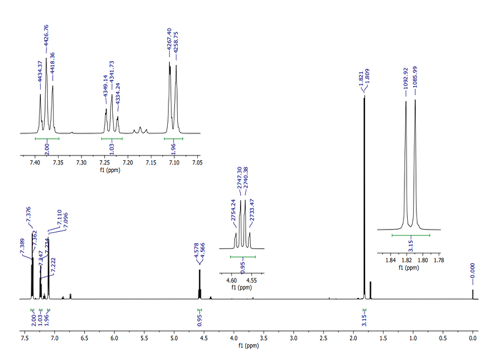
The ¹H NMR spectrum of phenyl-2-chloropropionate was recorded in CDCl₃ solution at 600 MHz using a Unity+600 (Varian) spectrometer (Figure 4).
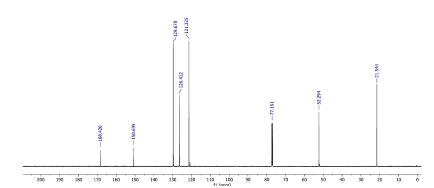
The following proton signals were identified in the obtained spectrum: A singlet at 1.75 ppm corresponding to the protons of the –CH₃ (methyl) group. Another singlet at 4.50 ppm corresponding to the protons of the CH₂ group adjacent to the carbonyl (C=O) group and chlorine atom. The relatively high chemical shift value of this signal is due to the influence of the electronegative atoms (Cl and C=O). A set of multiplet signals in the range of 7.05–7.40 ppm, characteristic of aromatic ring protons, confirming the presence of the phenyl ring. All observed signals and chemical shift values in the ¹H NMR spectrum fully match the proposed structure of phenyl-2-chloropropionate. In particular, the presence and order of individual signals for CH₃, CH₂, and aromatic protons serve as reliable confirmation of the compound’s structure. The ¹³C NMR spectrum of phenyl-2-chloro-propionate is shown in Figure 5.
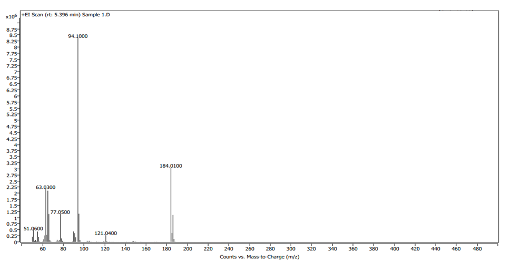
The ¹³C NMR spectrum of phenyl-2-chloro-propionate showed ten characteristic peaks corresponding to the carbon atoms. The singlet peaks at 21.54, 52.29, 121.32, 126.41, 129.67, 150.69, and 168.42 ppm are attributed to carbons of the phenyl-2-chloropropionate molecule, confirming its structure. The singlet at 77.16 ppm corresponds to the chloroform solvent. Upon injection of phenyl-2-chloropro-pionate into the GC–MS instrument under the specified conditions, a molecular ion with m/z = 184 was detected at a retention time of 5.396 minutes.
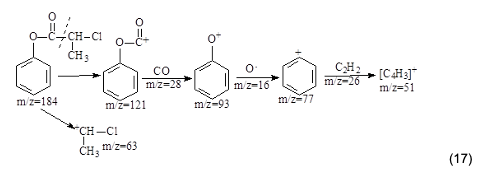
As shown in Figure 6, the fragmentation pattern of the molecular ion of phenyl-2- From the molecular ion of phenyl-2-chloropropionate, an ethyl chloride cation with m/z = 63 is released in the first fragmentation pathway. In the second pathway, a phenoxycarbonyl cation with m/z = 121 is produced. From this fragment cation, carbon monoxide elimination results in the formation of a phenoxy cation with m/z = 93. In the next stage, elimination of an oxygen radical from the m/z = 93 ion produces an m/z = 77 fragment. Finally, elimination of an acetylene molecule yields the fragment cation with m/z = 51, completing the fragmentation process. The formation of fragment ions from phenyl-2-chloro-propionate was observed as shown in equation 17.
Conclusion For the first time, we conducted the reaction of phenol with 2-chloropropionyl chloride and synthesized phenyl-2-chloropropionate, which opened a new direction in the chlor-acetylation reactions of aromatic hydro-carbons. During the experiments, equimolar amounts of phenol and 2-chloropropionyl chloride were used. The reactions were carried out both by directly reacting phenol with 2-chloropropionyl chloride in benzene solution and by first preparing sodium phenolate. In the direct reaction conducted in benzene solution by heating for 10–15 hours, the product yields ranged from 42% to 64%. When sodium phenolate was prepared in benzene and then reacted, the yield significantly increased, reaching up to 72%. Reactions conducted in acetone as solvent under heating for 7–12 hours resulted in yields of about 45–62%. The experimental results showed that when benzene and acetone were used as solvents, benzene facilitated the reaction more efficiently. Infrared (IR) spectral analyses confirmed the presence of the ester group in the phenyl-2-chloropropionate molecule (strong C=O absorption at 1756 cm⁻¹), as well as signals characteristic of the aromatic ring and C–Cl bond. In the ¹H Nuclear Magnetic Resonance (NMR) spectrum, the following were identified: a singlet corresponding to the methyl group (1.75 ppm), a singlet corresponding to the CH₂ protons located near the chlorine and carbonyl groups (4.50 ppm), and multiplets corresponding to the aromatic ring protons (7.05–7.40 ppm). In the ¹³C NMR spectrum, ten signals corresponding to the carbon atoms were detected, confirming the compound’s structure. GC–MS analysis revealed a molecular ion (m/z=184) and sequential fragmentation pathways, resulting in fragment ions at m/z=121, 94, 77, 63, and 51. The studies determined that reactions con-ducted in acetone also produced the C-acylated compound, 4-hydroxyphenyl-2-chloropropionate. This C-acylation reaction was explained by the formation of a moderately bulky and stable complex. Additionally, the absence of acylation at the ortho position was attributed to the large size of the 2-chloropropionyl chloride and steric hindrance. The –OH group in the phenol nucleus directing acylation to the para position corresponds to the selectivity reported in the literature.
Acknowledgments We express our gratitude to the Faculty of Chemistry, Mirzo Ulugbek National University of Uzbekistan and Almalyk State Technical Institute for their support in conducting this work.
Funding Sources This research did not receive any specific grant from funding agencies in the public, commercial, or not-for-profit sectors.
References
|
|||||||||||||||||||||||||||||||||||||||||||||||||||||||||||||||||||||||