|
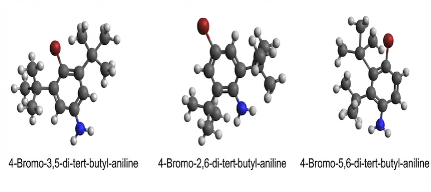
Introduction The molecular formula of the compounds investigated in this study is C₁₄H₂₂BrN. Three constitutional isomers were considered: 4-bromo-3,5-di-tert-butyl aniline (Isomer A), 4-bromo-2,6-di-tert-butyl aniline (Isomer B), and 4-bromo-5,6-di-tert-butyl aniline (Iso- mer C). Infrared spectroscopy is a well-established analytical technique for identifying organic compounds and differentiating constitutional isomers that share the same molecular formula but differ in atomic connectivity [1]. The integration of experimental spectroscopy with computational analysis provides a robust framework for vibrational mode assignment and structural characterization. Aniline derivatives constitute an important chemical family with extensive applications in environmental assessment, pharmaceuticals [2], polymer industries, agro-chem- icals [3], textile dyes, paints, stationery products [4], and hair dyes [5]. The compound C₁₄H₂₂BrN represents a moderately substituted member of this family. Substitution by tert-butyl groups can influence the intrinsic electronic and vibrational properties of aniline derivatives. Notably, aniline-based materials have demonstrated metallic-like behavior in conducting polymers [6,7], making them valuable in industrial applications. Furthermore, aniline derivatives serve as useful test systems for evaluating the accuracy of DFT methods in pharmaceutical and materials research [8]. Previous com- putational investigations have provided insight into reaction pathways and non-planar geometries of aniline derivatives using ab initio and DFT approaches [9,10]. Advances in computational chemistry and vibrational spectroscopy software have significantly enhanced the ability to predict molecular properties prior to experimental synthesis [11]. In materials science and chemical safety assessment, computational chemistry and toxicity prediction have become indispensable tools. Skin sensitization remains a major concern for consumers and regulatory authorities, particularly for cosmetic ingredients [12]. Computational prediction of dermatological effects allows early-stage hazard screening while reducing reliance on animal testing. With continued development of computational chemistry platforms, predictive modeling has become an essential complement to experimental investigations [13]. However, selecting an appropriate computational model for substituted aniline derivatives remains challenging. The present study addresses this issue by combining DFT-based vibrational analysis with QSAR-based dermatological assessment. Figure 1 features the optimized forms of the three different isomers (A, B & C).
Stereochemistry of Isomers Each molecule contains an amino group attached to a single aromatic ring, with bromine substitution at the meta position. The aromatic ring comprises six carbon atoms, while two tert-butyl groups (4 + 4 carbon atoms) are attached at positions 3/2/5 and 5/6/6, giving a total of 14 carbon atoms. The molecules contain twenty-two hydrogen atoms, three double bonds, and no triple bonds, as illustrated in Figure 1.
Computational Method Molecular structures were constructed usingAvogadro 1.2 Molecular Editor [14]. Eachisomer was geometrically optimized, andtheoretical results were compared using theKnowItAll Informatics System. Vibrational Parameter Use IR spectra calculations were conducted usingthe B3LYP functional with the Pople 6-31G*basis set. It enhances the time of compu-frequency calculations and IR spectrasimulations were performed using theGAMESS program [15]. Skin sensitizationpotential was evaluated using the LabMolPred-Skin QSAR platform [16].tation, giving better results. Parameters forelectrostatic potential map calculations aresame as the above parameters.
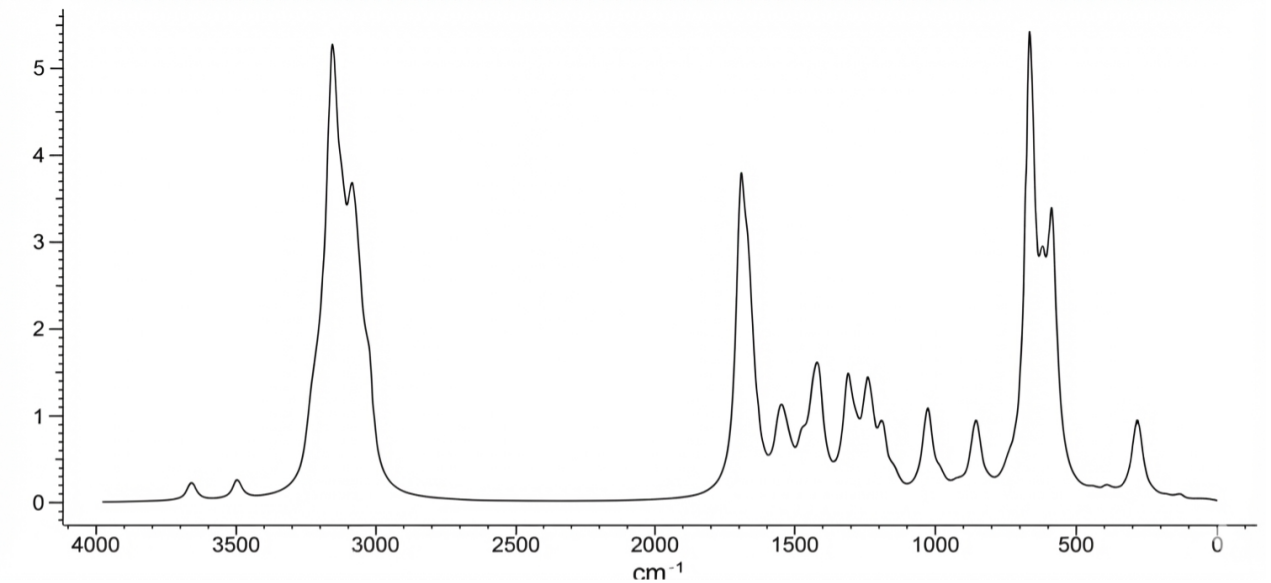
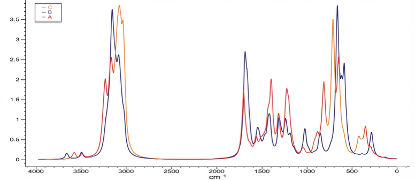
Computational Results Isomer Aniline molecular docking simulating base results show that isomers. All three isomers exhibited an identical molecular weight of 284.2 g/mol. Molecular weight provides very useful information such as viscosity. Higher molecular weight monomers require additional energy during formation processes. The molecular docking simulation tool is easily incorporated. Also, it more accurately models near to reality. Total number of atoms is 38. I.R Theoretical Value The spectrogram for IR value for 4-bromo-3,5-di-tert-butyl-tert aniline Isomer (A & B) lies in 0-3500 cm-1. It is clearly interpreted from Figure 2. The following attachments are bonded with an aromatic ring:
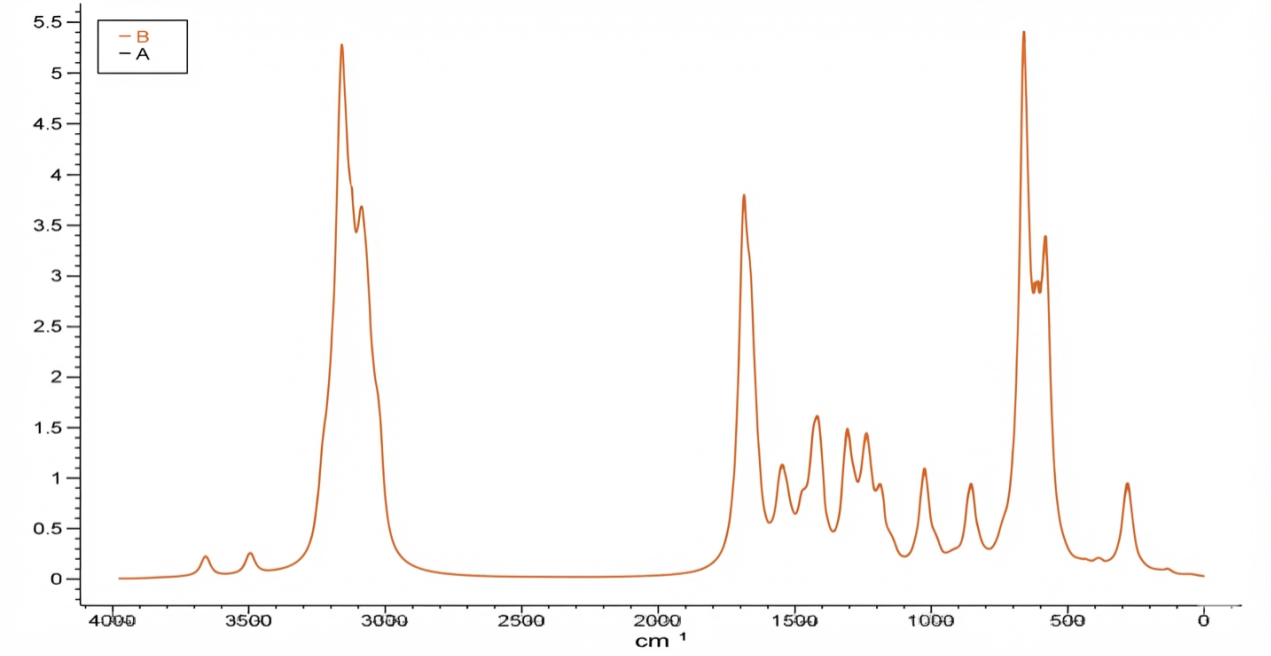
From Figure 4, it is clear that both Isomers A & B are showing the same spectrogram (so there is no need to explain Isomer B separately). From Figure 4, the IR spectra of Isomers A and B exhibit complete overlap, indicating no significant vibrational differences. It is further revealed that there is no difference. Ergo, for determination of IR frequency, it is hard to differentiate the results.
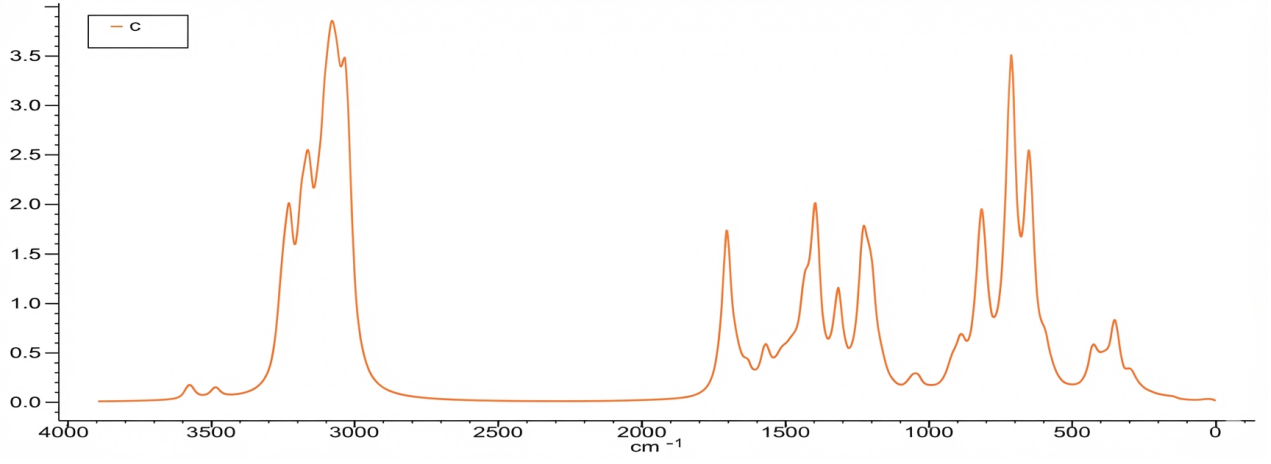
From Figure 5, it is clear to see that the alkane C-H medium antisymmetric 1400 cm/1 intensity; the other alkane C-H symmetric intensity of Isomer C is also slightly high. The alkane CH symmetric at 3090 cm/1 high peak means strong vibration. These are due to the attachment of butyl atoms at one side. While the vibration of amine groups also slightly fluctuates, as shown in the spectrogram in Figure 5, small antisymmetric vibration of NH 3450 cm/1 are due to anti-symmetric movement of hydrogen atoms that are attached with a nitrogen atom.
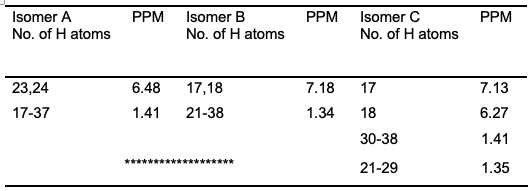
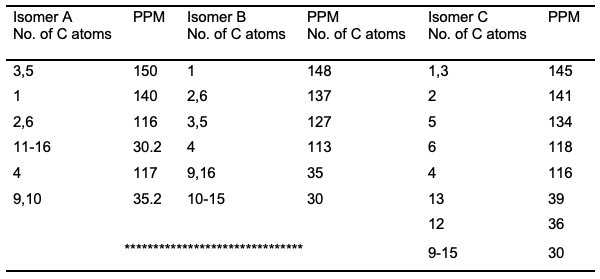
Theoretical NMR Analysis Theoretical NMR chemical shift calculations were performed to evaluate the proton and carbon environments of the three constitutional isomers. The predicted ¹H NMR chemical shift values are presented in Table 2, while the corresponding ¹³C NMR values are summarized in Table 3. Variations in the chemical shifts are primarily attributed to differences in substitution positions of tert-butyl groups on the aromatic ring, which influence local electronic environments.
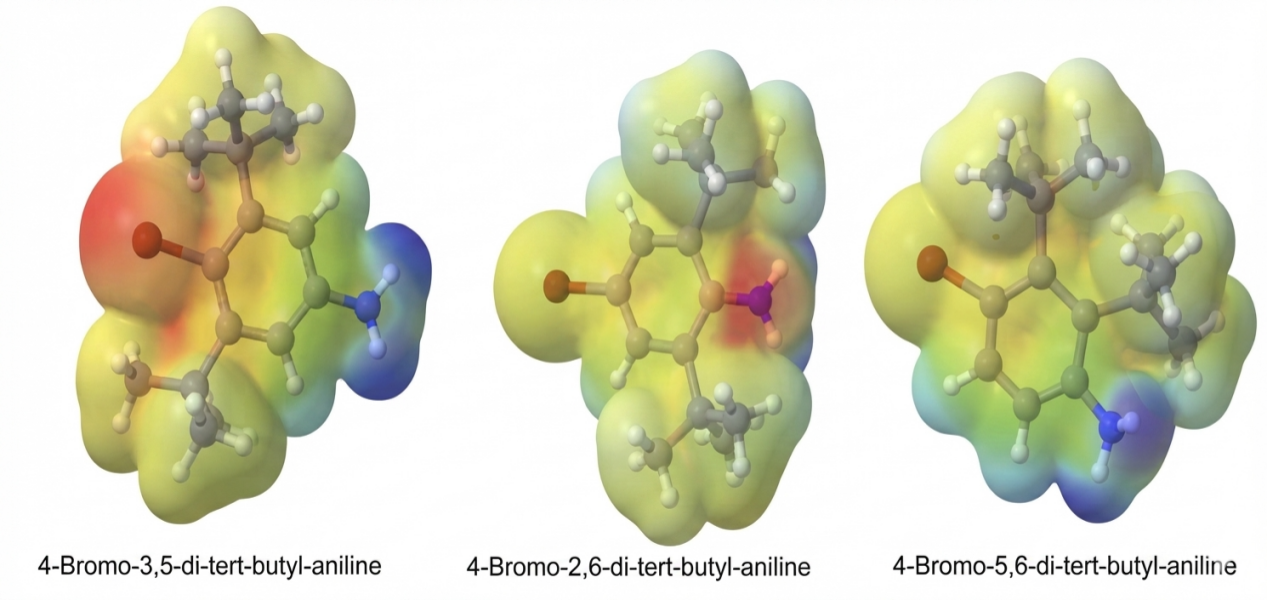
Electrostatic Potential Map In chemistry, electrostatic potential is a classical and fundamental concept. Many observables of molecules, such as dipole moments, chemical shift, and electromagnetic spectra, can be correlated to atomic charges in the molecule, and many structure-property theories of molecules are based on the idea of atomic charges. The role of electrostatic potential in chemistry is a well-known [17] well-established concept in chemistry.
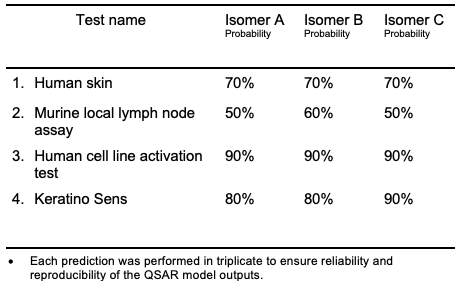
From Figure 6, it is clear to see that the charges of Isomer C are completely shifted towards one side. Dermatological evaluation “Is this organic isomer safe for human use?” is a fundamental question that arises before development and regulation of any cosmetics chemical, and evaluation of its toxicity impact on human skin [18,19]. With advancements in science, the practice of testing chemicals on animals is no longer needed, and the sale of cosmetics products tested on animals is also banned in developing countries. Tables 1-3 show that the above-mentioned three isomers of aniline are skin sensitizers. This evidence proves that with human skin contact, they can lead to sensitization. These cause problems like damage to the immune system, interference with hormones, and may pose potential long-term health risks, subject to further experimental validation. Patho-mechanisms of the allergic response is a complex mechanism, although all the findings need confirmation in humans. Contact allergy is the result of the activation of both innate and adaptive immunity in response to haptens [20]. Cosmetics products directly used by humans may be released into the environment as an indirect consequence of their use [21].
Conclusion The present computational study provides asystematic vibrational and dermatological assessment of three constitutional isomers of 4-bromo-di-tert-butyl aniline using density functional theory and QSAR-based modeling. The IR spectroscopic analysis demonstrates that Isomers A and B exhibit complete spectral overlap, indicating that constitutional variation at these substitution positions does not produce distinguishable vibrational differences. In contrast, Isomer C shows minor variations in alkane C–H stretching and amine vibrational modes, which can be attributed to the asymmetric placement of tert-butyl substituents on the aromatic ring. Although the applied DFT methodology successfully reproduces key vibrational features of the aniline derivatives, the results also highlight the inherent limitations of purely theoretical approaches in fully resolving subtle isomeric differences in IR spectroscopy. Nevertheless, the combined use of vibrational analysis and electrostatic potential mapping provides valuable insight into substitution-dependent electronic effects within the aniline framework. QSAR-based dermatological evaluation predicts that all three isomers possess skin-sensitizing potential. These findings suggest that, despite minor structural and vibrational differences, the constitutional isomerism examined here does not significantly alter the predicted dermatological risk profile. Accordingly, the studied compounds appear unsuitable for cosmetic applications, subject to further experimental validation. Overall, this work emphasizes the usefulness of integrated DFT and QSAR methodologies for evaluating structural isomerism, vibrational behavior, and potential health hazards of aniline derivatives. The approach presented here may serve as a supportive framework for preliminary hazard screening and for guiding regulatory considerations related to cosmetic and consumer-use chemicals.
Supplementary Data Meta data associated with the current study also obtain from corresponding author on request.
References
|
||||||||||||||||||||||||||||||||||||